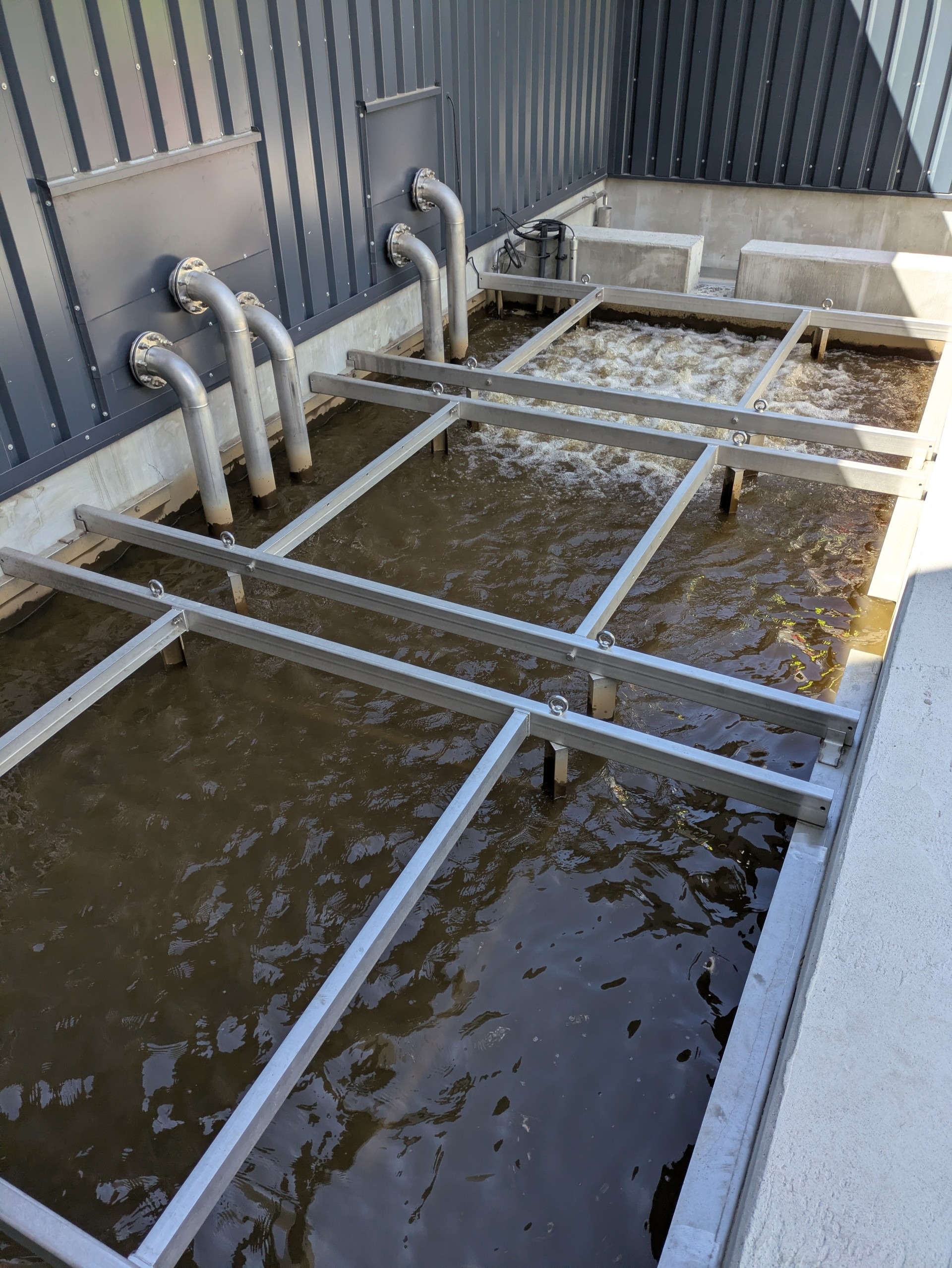
Biomass Condensate Treatment with C-MEM MBBR – An Efficient Solution for Industrial Wastewater
The treatment of condensate from biomass plants poses unique challenges for operators: high organic loads, fluctuating compositions, and strict discharge limits require technologies that are both high-performance and robust.
The combination of C-MEM membrane technology and the MBBR (Moving Bed Biofilm Reactor) process offers an innovative and future-proof solution.
Initial Situation: Challenging Wastewater Characteristics
A current project in the wood processing industry clearly illustrates just how demanding the conditions are. With a daily wastewater volume of approximately 252 m³ and a maximum inflow of 12 m³/h, the AEV parameters for direct discharge into a sensitive water body (the Enns River) must be reliably met. These requirements show that conventional processes often reach their limits in such situations.
Technology Combination: C-MEM Meets MBBR
The combination of MBBR and C-MEM offers decisive advantages:
MBBR (Moving Bed Biofilm Reactor)
Biological process using freely moving carrier media
High biomass concentration and stable process control
Very well suited for fluctuating loads
C-MEM Membrane Technology
Efficient solid-liquid separation
Very high effluent quality
Heavy metal removal, particularly zinc
Compact design and minimal space requirements
The integration of both technologies results in a high-performance integrated system that ensures both biological degradation processes and reliable solids retention.
System Design and Implementation
In the project described, a total of:
3 C-MEM modules
192 membrane cartridges
are used. The plant is designed for continuous operation and ensures stable treatment performance even with temperature fluctuations (up to 40 °C at the inlet).
The plant has been successfully commissioned and is already in regular operation. Initial operational experience shows consistent compliance with the required effluent parameters as well as high process reliability.
Advantages at a Glance
High effluent quality even with difficult wastewater
Compact design reduces investment and operating costs
Flexibility in the face of load fluctuations
Future-proof design through compliance with strict limits
Scalability for different plant sizes
Conclusion:
The treatment of biomass condensates requires innovative solutions. The combination of MBBR and C-MEM represents a high-performance, cost-effective, and sustainable technology that meets the industry’s growing demands.
For companies in the wood and biomass industries in particular, this solution opens up new opportunities to treat wastewater efficiently while ensuring compliance with environmental regulations.